Temple weddings in Kerala are visually rich, emotionally dense, and often much faster than they appear from the outside. For photographers, the challenge is not only technical. It is cultural.
Respect comes before access
Every temple has its own rules around movement, dress, footwear, flash usage, and where a camera team can stand. Good coverage begins by understanding those boundaries rather than negotiating them on the fly.
Couples are usually relieved when their photographer already expects restrictions and builds around them.
These ceremonies move quickly
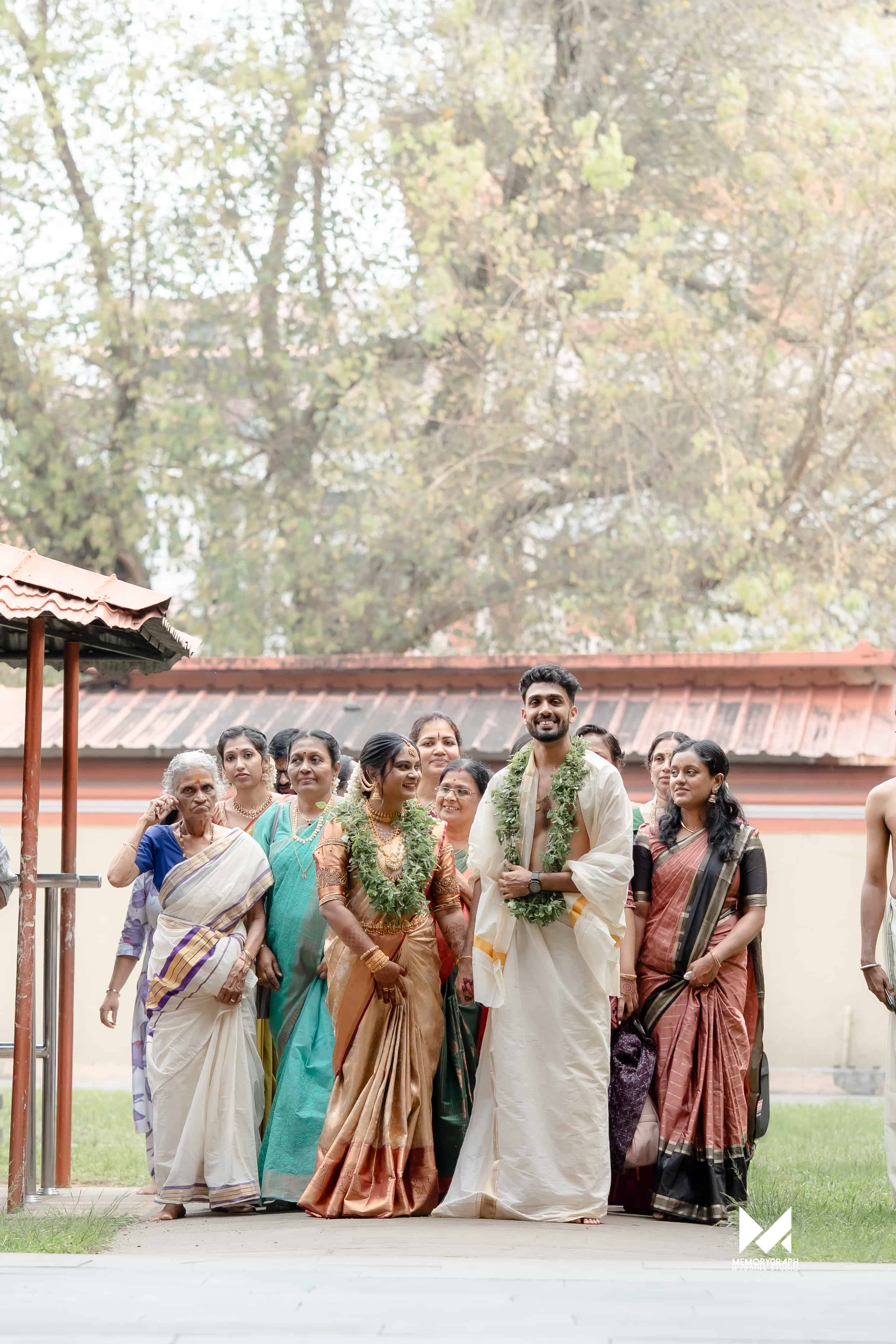
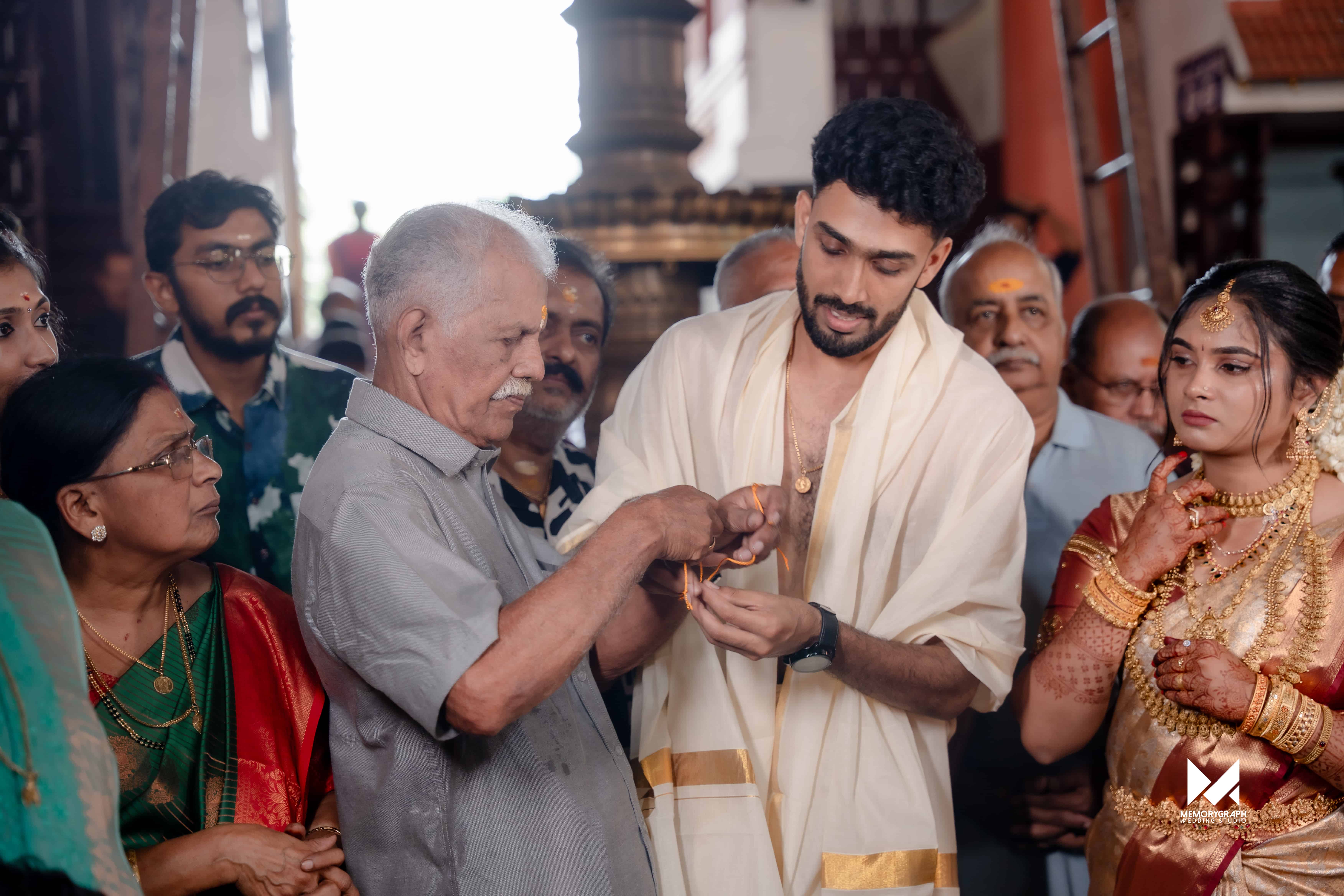
Unlike long staged events, many temple weddings unfold in compact sequences. Key moments happen in bursts. If a team is late to anticipate one ritual, there may not be a second chance.
That is why preparation matters more than equipment. We pay close attention to:
- ritual order
- priest instructions
- family placement
- where the cleanest sightlines will be
Sound and atmosphere matter too
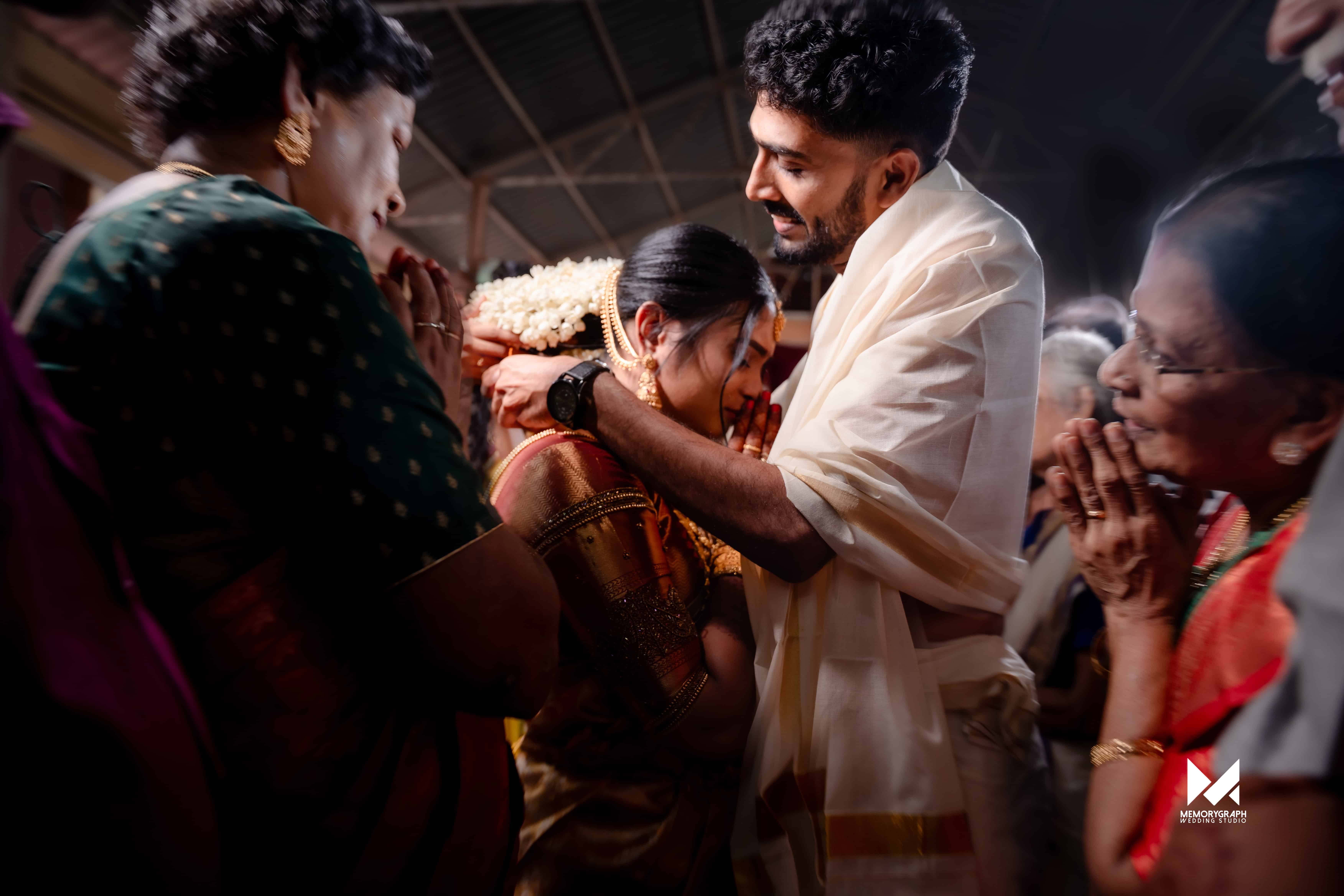
Temple weddings are not only about the visible ritual. They carry texture: lamps, bells, jasmine, silence, movement, and family expressions. Documentary coverage should preserve all of that atmosphere instead of turning the event into a checklist.
The best galleries feel immersive because they hold onto those surrounding details.
Portraits work best before or after the rush
Trying to force couple portraits in the middle of active temple traffic usually creates stress. A quieter pocket before guests arrive or a short session after the main ceremony often feels much better and produces more relaxed frames.
Choose a team that knows how to be unobtrusive
Temple coverage rewards restraint. Loud direction, aggressive staging, or constant interruption can flatten the dignity of the day. The right photographer knows when to step in and when to disappear.
That balance is what lets a gallery feel both beautiful and truthful.